Media & Entertainment
Student Creators Harness AI In Storytelling
How a SCAD design challenge helps Autodesk Research explore AI, authorship, and the future of storytelling
As AI continues to show up in creative work, a central question remains: how will creators remain in control of what they make? This is the challenge Autodesk Research is exploring with StoryArc, a research prototype designed to connect stages of pre-production, from story planning and scripts to environments, storyboards, and previs.
Using StoryArc and this question as a foundation, 13 student teams at the Savannah College of Art and Design were invited to test the tools, combine them with their own workflows, and show researchers where the technology helped or got in the way. In addition to producing polished work, the aim was to learn how AI and creative tools could fit into the way people actually make things.
Directly learning from creators is central to StoryArc’s research. In the video below, SCADask Executive Director Muunuu Nandigjav talks with Autodesk Research’s Matthew Spremulli and Frederik Brudy about how qualitative research shapes the tool, why its features work with or without AI, and how emerging technologies might open new possibilities for storytelling while keeping creative intent at the center. The SCAD challenge brought this research approach into practice, giving students the chance to explore the tools through their own creative workflows.
AI as a way into unfamiliar work
Seeing students from different disciplines use StoryArc gave Autodesk Research a window into how AI might support varied skills, workflows, and creative starting points. Principal Research Scientist Frederik Brudy reflects:
“One moment that captured the value of the challenge was seeing students work beyond their usual disciplines. For example, one team brought together students from advertising and sound design who, despite having no animation background, created a full preview of a TV spot. In another team, a creative writing student used StoryArc to visualize their ideas through storyboards, having had no prior experience in creating these. The tools helped teams take on unfamiliar parts of pre-production and make their ideas easier to share.”
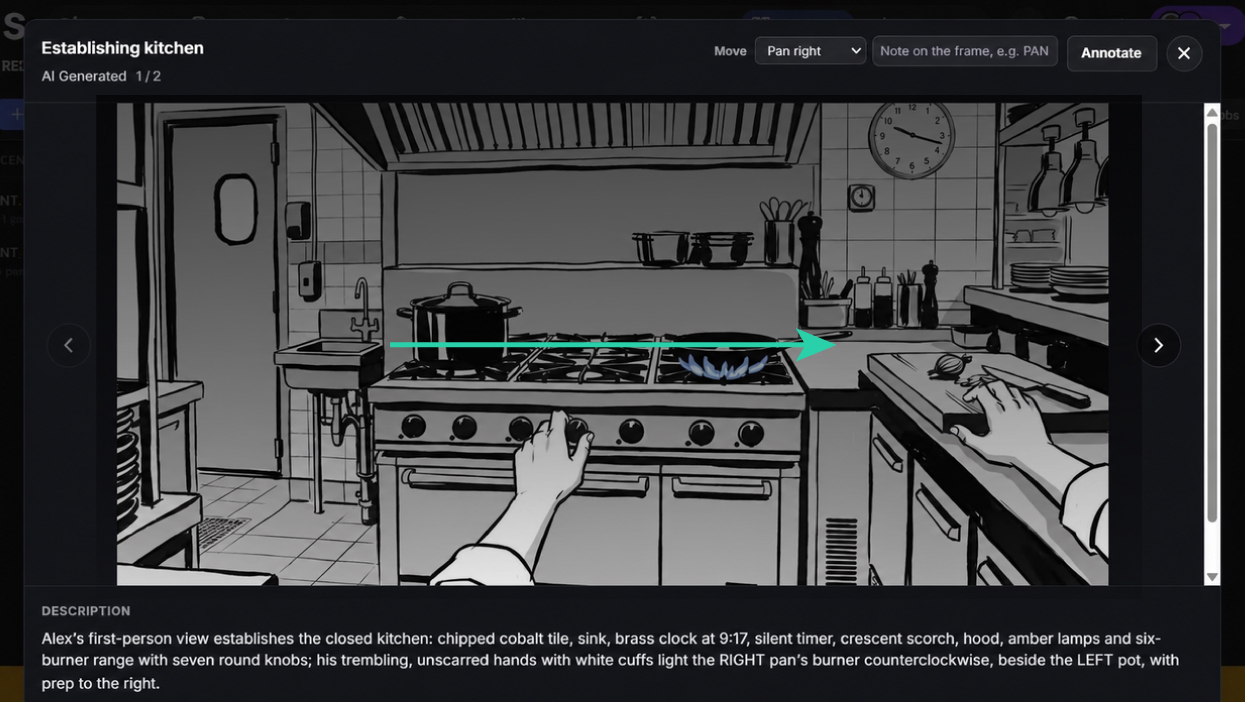

Still of Team Vegan’s “Reframe” VR exposure therapy concept in Autodesk Research prototype, StoryArc.
Other teams explored different possibilities, including VR exposure therapy, a concept students imagined to help users face their fears in a safe virtual space. Across the challenge, students used AI to venture beyond their usual areas of practice while drawing on the skills and perspectives they already had.
Advertising and branding student Isabella Maddaleni described what that meant for Team Speedwalk:
“What we discovered is that strong ideas, paired with the right AI tools, can carry a project into territory we’d never worked in before. […] We’re leaving with a win, but more importantly, with the confidence to take on creative challenges outside our discipline.”
Her teammate Minho Dong echoed that sense of discovery: “With a mix of AI tools and our own creativity, we can hold our own in a space we aren’t familiar in—and we can even earn a spot as winners!”
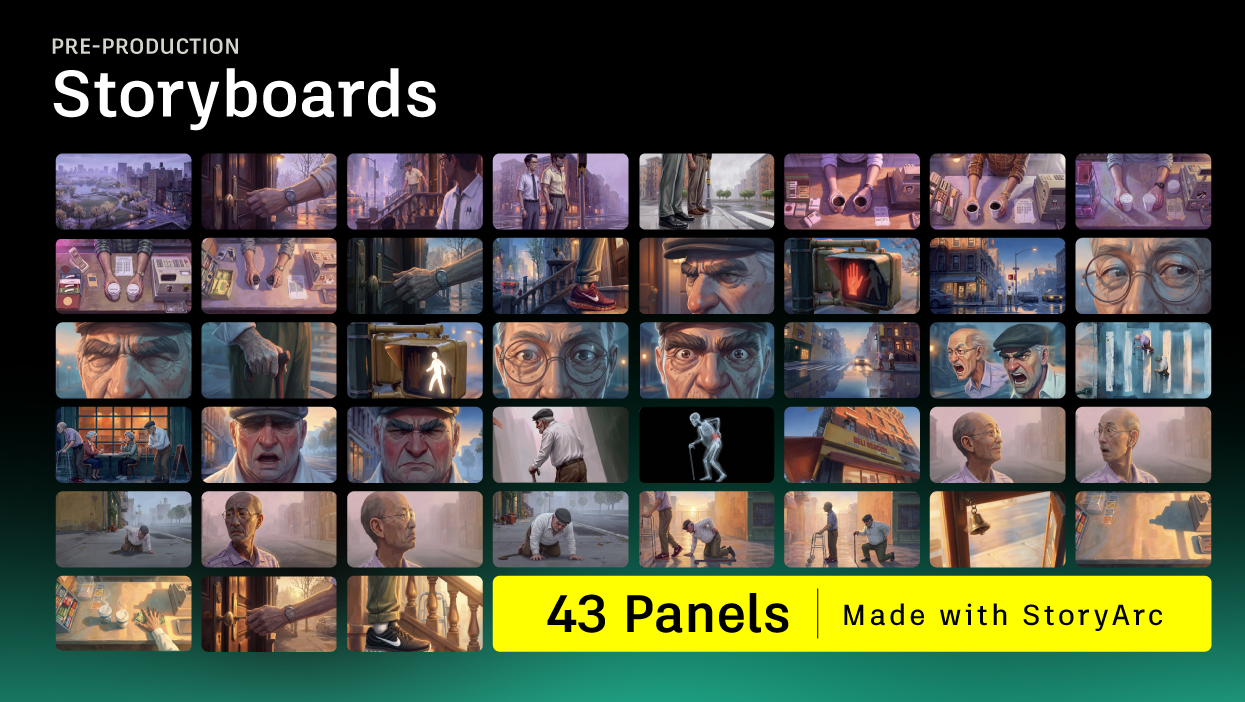
Team Speedwalk’s pre-production storyboard panels in StoryArc.
Brudy saw a pattern in where students chose to use AI:
“The week also raised questions about authorship: students seemed more comfortable using AI outside their core craft, while keeping a close hand on writing, directing, style, and details.”
That distinction captures the promise of AI as a tool: it can help people cross into unfamiliar parts of a process, while creators retain a close hand on the choices that define the work.
The human decisions behind the work
UX design student Zilin Zhang from Team Purple Mood described how her team began with its intended audience and message:
“Since our audience was business leaders, we wanted the characters and their exaggerated situations to make people laugh, then think about the tension between work demands and personal life. We hoped the humor would make the message about work-life balance easier to connect with.”
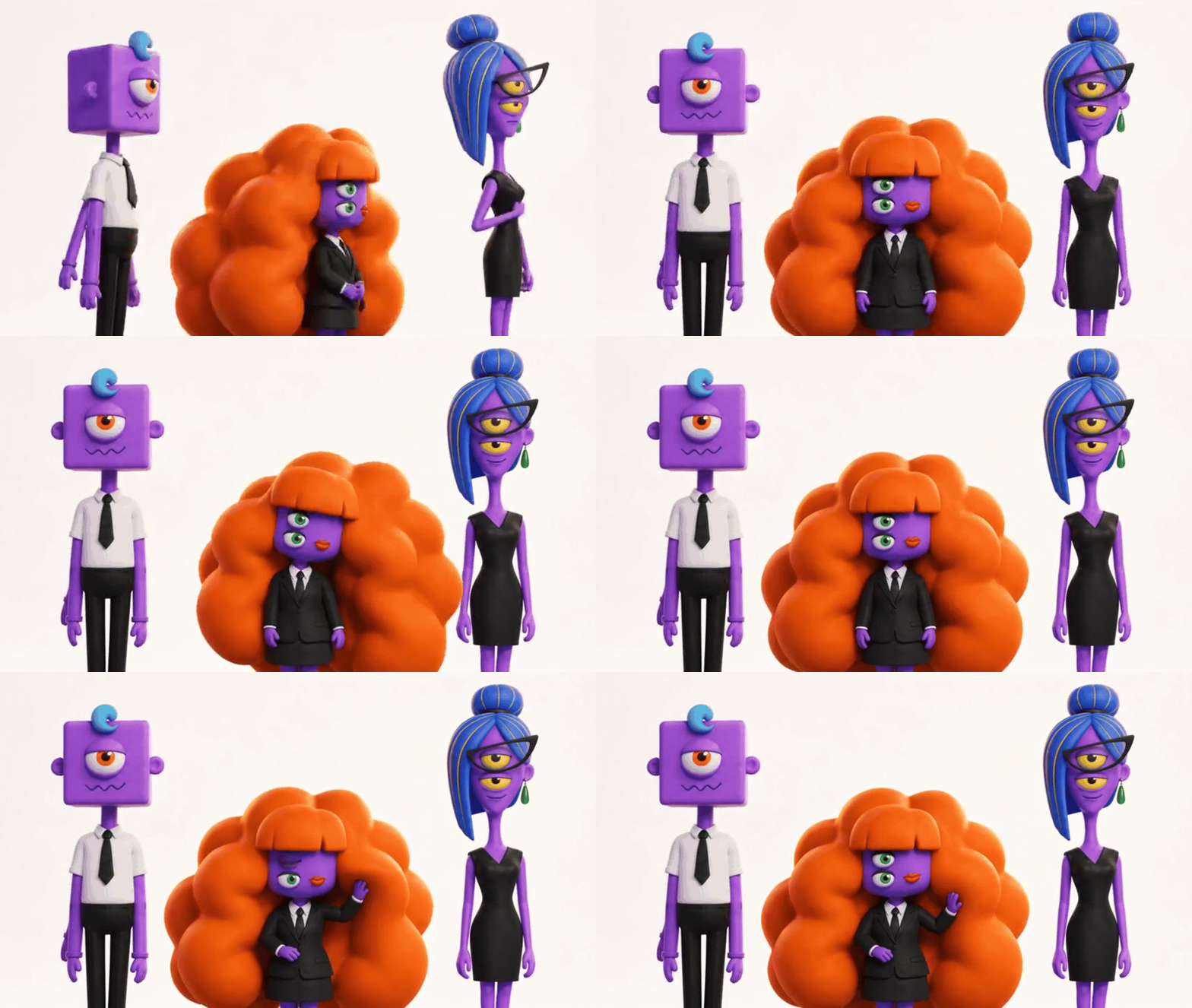
Team Purple Mood’s character design.
Her account highlights the decisions that give a project direction: who it is for, what it should make them feel, and how form and tone can carry an idea.
Motion Media student Xiaotong Zhou saw the challenge as a chance to consider how AI might change creative practice, while also reflecting on the purpose behind the visuals:
“Having the opportunity to explore this new technology through hands-on creation also encouraged me to rethink traditional creative workflows and the evolving demands of the industry.”
She also reflected on AI’s growing place in creative work: “I believe AI has become an undeniable part of today’s creative industry.”
She added:
“Seeing people connect with and relate to these ideas made me feel that what we were trying to communicate was truly meaningful. It also reminded me to think more deeply about the messages and ideas behind the visuals.”
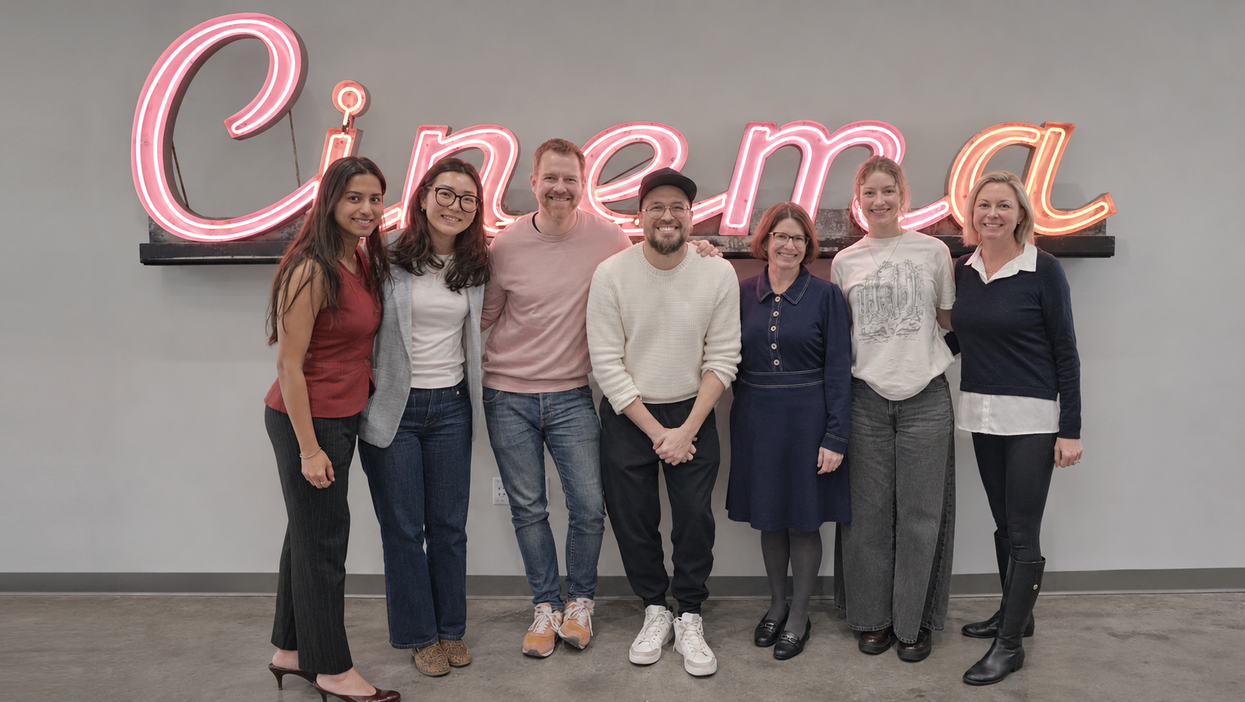
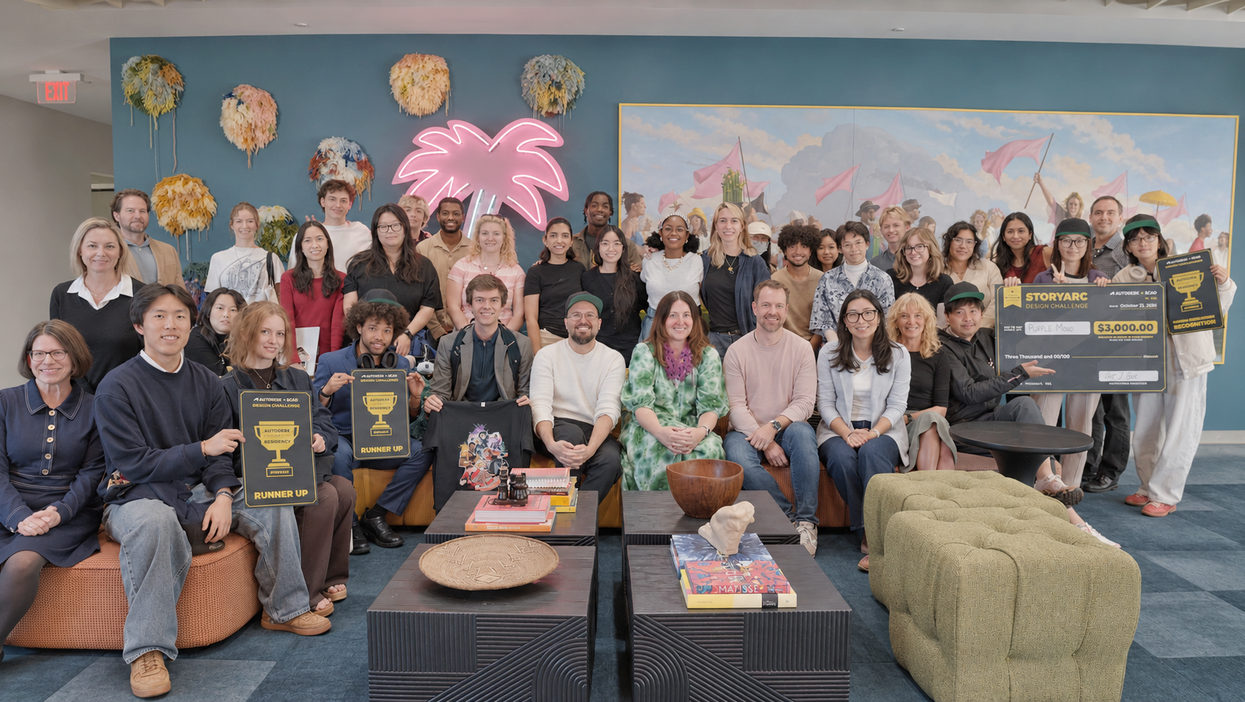
The cross-collaborative minds behind the design challenge from SCAD and Autodesk Research.
Natasha Vasiljevic, SCAD Professor, Advertising & Branding, and a faculty judge saw both experimentation and human reasoning at work:
“I saw AI expanding the possibilities for experimentation: students explored ideas and moved between concepts and visual storytelling seamlessly. But to me, the most interesting was seeing how students made decisions themselves: what direction to pursue, what to refine, and how to communicate their ideas.”
For Vasiljevic, the exchange between academia and industry is part of what makes this work valuable:
“Industry brings real-world challenges into emerging technologies, while academia provides a wide space to experiment and explore without always knowing the real outcome. […] The more we share knowledge across disciplines, the more interesting the applications of AI can become.”
Many tools, one creative process
StoryArc was part of a wider creative process. Students also used an AI-powered tool that turns live-action footage into editable 3D scenes, and other tools they selected for their projects. Interactive design and game development student Kecheng Zhu from Team Purple Mood continued using StoryArc and Flow Studio after the challenge and built a custom plugin connecting StoryArc with Blender and SeeDance 2.5 using 3D blockouts.
Reflecting on his experience, Zhu said, “Since the competition ended, I have continued to use StoryArc and Flow Studio to create different works. Honestly, I’ve fallen in love with them.” His work reflects a broader pattern: students brought tools together around their creative process and goals.
Autodesk Research Principal Research Scientist David Ledo saw the challenge as an opportunity to observe how creators make those choices:
“AI-powered workflows are really about ‘filling’ the gaps. Creators can spend time and finesse what they are good at, and use AI to either complement their gaps of expertise, or allow them to see many potential polished versions faster.”
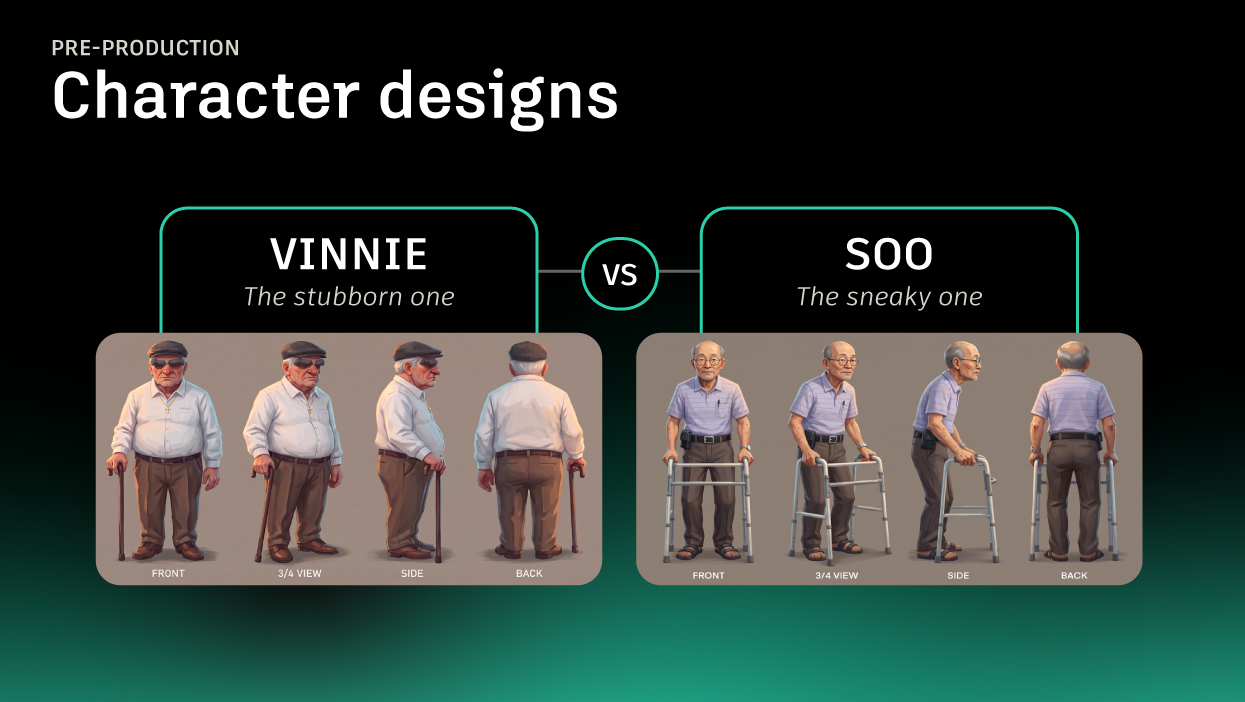
Team Speedwalk’s character design.
He also noted that students combined different tools and approaches, sometimes creating their own connections between them. For Ledo, the important part was seeing how people can bring their own voices to the work and use tools to help carry their ideas forward. “I loved seeing so many people from different backgrounds come together, share their unique voices, and remind us once again that we are now in an era where it almost feels like anything is possible, people just need the right tools at the right time to truly harness their full creative potential.”
From SCAD to the residency
This design challenge is part of a broader research journey. The top three teams were invited to join the Autodesk Research Residency Program, bringing their perspectives to questions that extend beyond StoryArc to explore as part of a dedicated residency in the months to come. One guiding question is: “How can AI-enabled systems interpret real-world conditions, human experience, and creative intent to help people make better-informed decisions?”
Athena Moore, Senior Manager of Community Engagement Strategy, sees the students’ work as part of that wider conversation:
“What stood out to me was how intentionally the students approached AI, using it to expand their creative capabilities, experiment with unfamiliar workflows, and fill gaps in their technical skills, while recognizing where human judgment and artistic expression mattered most. We’re seeing similar questions emerge across our Research Residency community. I’m excited to see these students bring their perspectives into that broader research conversation, challenging the technology and helping us explore what’s possible when human creativity and AI work together.”
Team Vegan’s reflection offers one example of the spirit students brought to that exploration. Rather than stay within familiar applications, the team pursued an ambitious, unconventional idea: “We would much rather pursue an ambitious idea and learn something unexpected than play it safe and only accomplish what we already knew was possible.”
Students used AI to explore beyond their usual disciplines while bringing their own ideas and judgment to each project. By working directly with students as they create, researchers can learn from real creative choices and workflows—insight they can’t get from the technology alone. Their work helps Autodesk Research understand how AI can support creators in carrying their intent through the creative process.
Keep up with the Media and Entertainment Research team’s work as they continue to explore creator-controlled storytelling with the students at SCAD and beyond.
Get in touch
Have we piqued your interest? Get in touch if you’d like to learn more about Autodesk Research, our projects, people, and potential collaboration opportunities
Contact us