How well can AI models edit 3D CAD?
- Why CAD Editing matters: Most CAD tasks involve adapting an existing design. Even when creating designs from scratch, designers will refine what they have made over multiple iterations. For AI to be useful to designers, it must be able to make the edits that designers want.
- What we did: We developed a benchmark for measuring 3D CAD editing ability in AI models, including a dataset of editing requests from professional CAD designers and multiple methods for evaluating edits made in response to these requests.
- What we found: While frontier models are improving, but they still aren’t anywhere close to the level of human designer
A huge amount of CAD time is spent editing 3D models. While AI assistants have the potential to automate parts of this process, this will only be useful if the changes they make actually correspond to the intent of the designer. In this project, we developed one of the first ever benchmarks of CAD editing ability, allowing us to measure how well current AI models can edit CAD.
What is a benchmark?
Benchmarks are widely used in AI to track progress toward a specific task. By curating a set of task examples and measuring an AI model’s ability to perform those tasks, benchmarks make it possible to compare models with one another and with human performance.
Collecting editing requests
To capture a wide range of edits, we sent 3D models from the Fusion Gallery Dataset to a group of professional CAD designers from Ciklum and asked them to request edits to these models. Previous benchmarks only considered requests in the form of text or images, but we wanted to allow designers to communicate in ways they found more natural: speaking out loud, interacting with 3D models, and drawing. We therefore recorded video requests while designers had 3D models open in Fusion.
Editing Request
Human Baseline Edit
Before we measure how well AI models follow these requests, we need to know whether other human designers can understand them. We asked another set of professional designers to follow the editing requests, providing a baseline level of editing performance.
Evaluating frontier models
We ran several frontier models (GPT 5.2, Gemini 3 Pro, Claude Sonnet 4.5) on the full set of editing requests, allowing AI models to inspect and refine their outputs up to 10 times. We experimented with different ways of hooking up AI Models to CAD tools, including Python CAD libraries and directly editing CAD models using Fusion API.
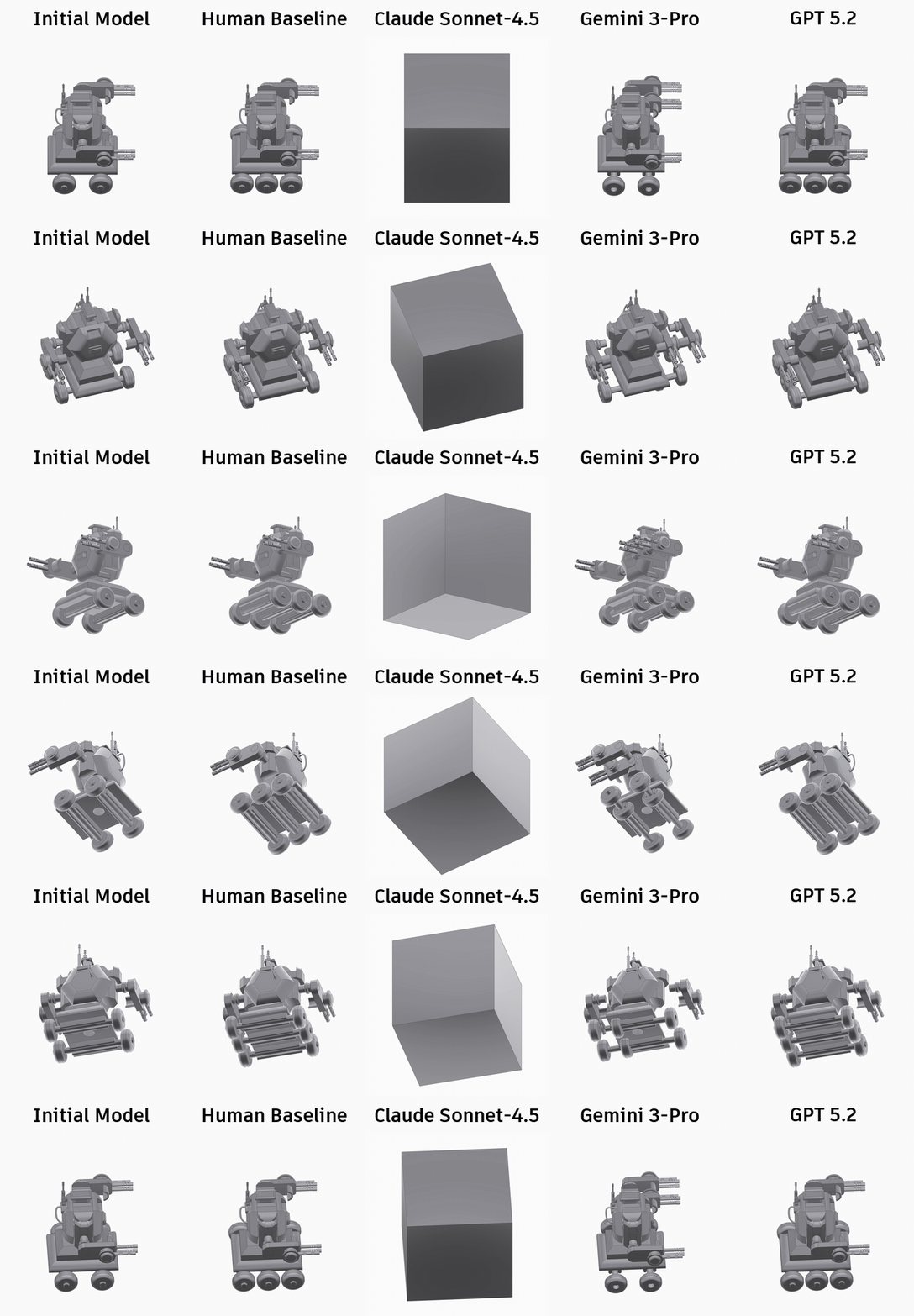
While professional designers have no trouble following editing requests, we get a range of responses from AI models. Claude Sonnet 4.5 struggled to do anything useful; Gemini 3-Pro got the gist of what was being asked but didn’t put the wheels where we’d expect them to be; GPT 5.2 followed the request perfectly
Measuring editing performance
We evaluated the edited CAD models with several geometric measures, VLM evaluations, and evaluations by human CAD experts. Human evaluations showed that there was a large performance gap between even the best AI model (GPT 5.2) and human baselines. While VLM evaluations and geometric measures did provide a rough sense of model performance, they did not correlate strongly with ratings from CAD experts, highlighting the necessity of human evaluations until better metrics are developed.
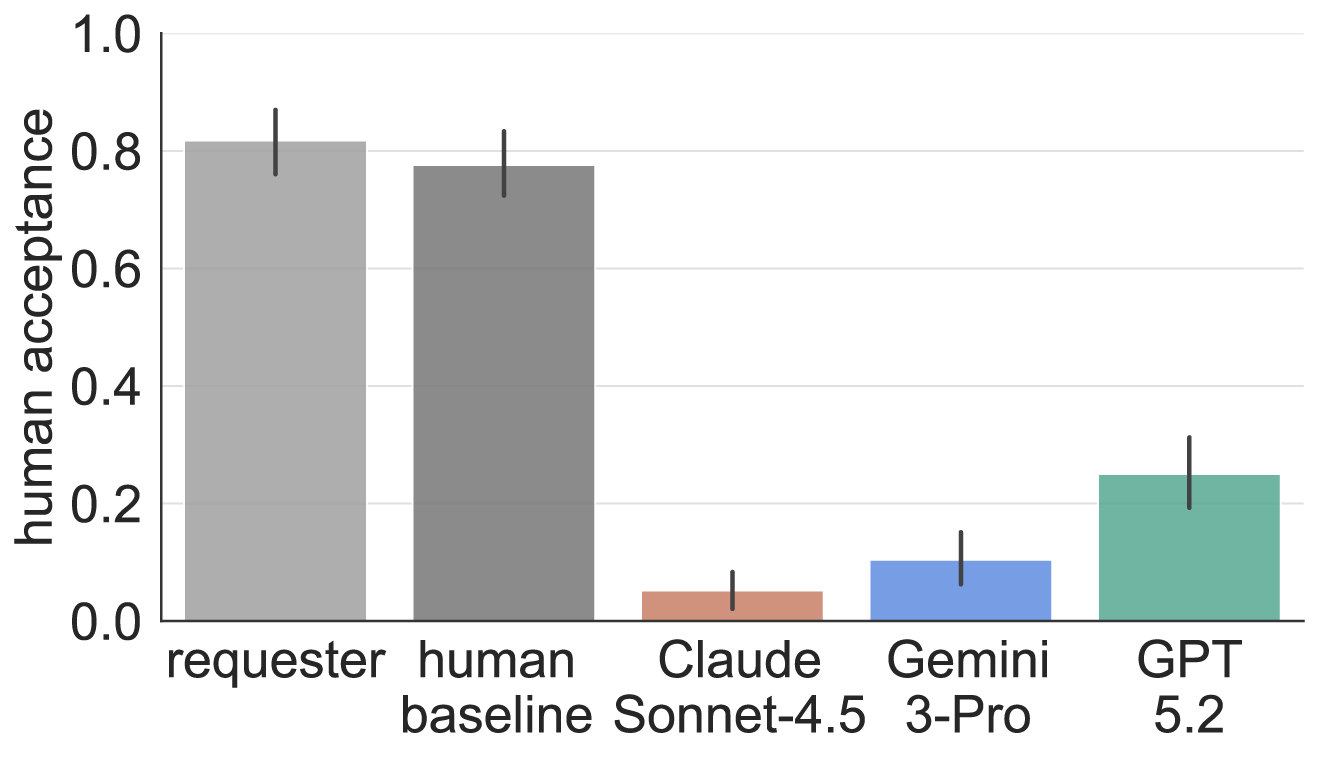
AI models produced fewer acceptable edits than professional designers.
Conclusions
While AI’s ability to edit CAD is currently a long way from professional human designers, it is progressing rapidly. This benchmark will allow the scientific community to track progress, as well as providing a clear target to aim for as models improve. Benchmark paper, data and code are available here.
Get in touch
Have we piqued your interest? Get in touch if you’d like to learn more about Autodesk Research, our projects, people, and potential collaboration opportunities
Contact us