Designing for Experience: Where Architecture, Neuroscience, and Movement Meet
Meet Fiona Zisch, Autodesk Research Visiting Scholar
When Fiona Zisch, Associate Professor in Architecture and Neuroscience at University College London (UCL), talks about architecture, she almost never starts with buildings.
She starts with experience.
Now joining Autodesk Research as a visiting scholar working with the Enlivened Design team, Fiona brings a background that spans architecture, neuroscience, movement, and design research. Her experience will help inform the team’s research in bridging innovative technology and empathic design to ensure that spaces are built for experience as well as function.
In a recent conversation, she reflects on the path that led her from architectural practice into brain sciences and why that journey feels increasingly relevant to the future of design, technology, and the built (and virtual) environment.
A Focus on Lived Experience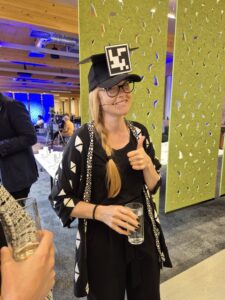
Looking back, Fiona describes her core interest as something that was “always there,” even if it took time to articulate it clearly. Within architecture, she found herself less drawn to materials or construction techniques in isolation, and more to the question of what it feels like to inhabit a space.
That may sound obvious, as experience is central to architecture, but Fiona is quick to note that many designers are equally drawn to technical, material, or structural questions. Those aspects matter deeply, she says, for example, because of how they contribute to lived experience.
“Materials and techniques matter because they shape how a space is lived and felt,” Fiona explains.
This interdisciplinary path has personal roots. Fiona’s mother is an architect, and her father was a physician specializing in radiology, with a particular interest in brain imaging. Growing up, architectural drawings were often pinned up next to MRI scans – a quiet but powerful juxtaposition.
Over time, Fiona began asking a simple question: what if we could look not only at what people say they experience in a space or how they behave in space, but also at what’s happening in their brains as that experience unfolds?
While this idea wasn’t unique, pursuing it was challenging. Architecture supervisors might be intrigued, but brain scientists at the time were more cautious about an architect proposing to run experiments.
It took years — and many conversations across Europe, the UK, and North America before Fiona found the right fit at UCL. There, she connected with researchers open to exploring spatial experience through neuroscience.
Designing to Thrive in Extreme Conditions
Fiona’s thinking about experience sharpened further through work on extreme environments. While still a student, she spent time at NASA in Houston, collaborating on speculative designs for human habitats on Mars. The work involved building full-scale mock-ups and imagining life in a place where the exterior environment is actively hostile to human survival.
In those conditions, designing for survival alone isn’t enough.
“If you’re on Mars, you don’t just want to survive—you want to thrive,” she explains. Thriving enables meaningful work, psychological wellbeing, and long-term sustainability. Extreme environments, she found, make experiential questions unavoidable.
Narrative, Film, and the Importance of Movement
Fiona’s interests continued to expand beyond conventional and extreme architectural boundaries. She studied film architecture, drawn to questions of spatial narrative and how stories unfold through space, as well as how space itself shapes meaning.
At the same time, another influence kept resurfacing: movement.
“Movement is one of the most fundamental ways we experience space,” Fiona says
This is part of Fiona’s current research with colleagues at UCL and international collaborators, including Autodesk, as part of the ‘100 Minds in Motion’ project, studying individual and crowd movement. It also harkens back to Fiona’s experience prior to studying architecture, when she was involved in dance.
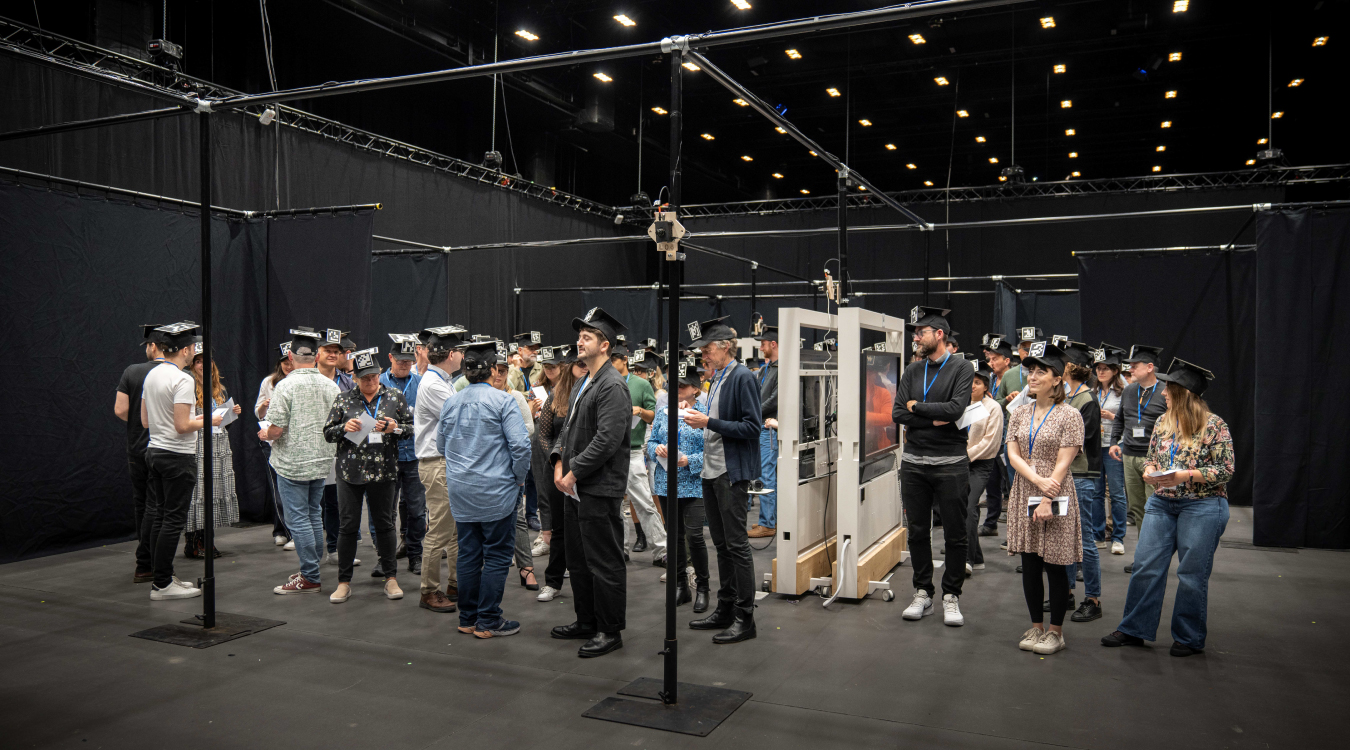
‘100 Minds in Motion’ project in action
Although she no longer performs, movement remains central to how she thinks about space. Moving through an environment isn’t just about getting from point A to point B; it’s an embodied experience that shapes perception, memory, and emotion. This is another current research program for Fiona and researchers at the UCL Queen Square Institute of Neurology, as they explore the use of eXtended Reality (XR) for neurorehabilitation.
This perspective continues to inform her teaching and research, particularly in work that sits between architecture, performance, and interaction design. It’s a part of her role as Programme Director MArch Design for Performance and Interaction at UCL, where she’s currently on sabbatical, and it also sets the stage for her engagement with neuroscience.
From Experience to Design Workflows and Inclusive Spaces
A key area of alignment is design research itself. Not just how people experience finished spaces, but how designers experience the process of designing.
As understanding of human experience deepens, it raises questions about design workflows: how decisions are made, what information designers need, and how tools might evolve to support more inclusive outcomes.
Empathy and intuition are essential parts of design practice, and Fiona strongly values embodied and tacit knowledge. At the same time, she recognizes these can be further cultivated, particularly when designers are working outside their own lived experiences, such as in healthcare or accessibility-focused projects.
The goal isn’t to promise complete insight into others’ experiences. Rather, it’s to offer better support and additional layers of understanding that help designers make more informed, thoughtful decisions.
Bridging Research and Practice, Together
Fiona’s role as a visiting scholar at Autodesk reflects a shared interest in bridging research and practice around creating environments, tools, and experiences that are more receptive to human needs and wellbeing. For Fiona, the appeal lies equally in what isn’t yet known and she sees her work with Autodesk Research as an ongoing, interdisciplinary effort, one that benefits from connecting academic research with industry contexts where ideas are tested, applied, and refined.
“This work isn’t about final answers, it’s about learning together,” Fiona says of her role at Autodesk Research.
She’s especially energized by how this moment aligns with a broader shift in design where researchers, practitioners, and institutions increasingly engage with questions of human experience, perception, and the measurable impact of space. Through the lens of Enlivened Design, these questions become actionable: how can insights from neuroscience and behavioral research inform the tools designers use every day? The field looks very different from when she began. It’s larger, more connected, and full of possibility.
The aim, she emphasizes, isn’t to solve everything in six months. It’s to build relationships, explore ideas, and contribute to something that extends beyond any one person or organization.
Get in touch
Have we piqued your interest? Get in touch if you’d like to learn more about Autodesk Research, our projects, people, and potential collaboration opportunities
Contact us