Autodesk Research 2025: A Year of AI, Innovation, and Impact Across Design and Make
Celebrating some of our biggest news and top stories of 2025
This was once again a big year for our Autodesk Research teams. From publishing papers and speaking at conferences around the world, to making a huge splash at AU and delivering AI tools, our teams contributed to Autodesk’s design and make platform for today and into the future. Take a walk with us down memory lane as we celebrate some of our top blog posts of the year.

AU 2025 wrapped up in Nashville earlier this fall, and the Autodesk Research team once again made a big impact. With a dedicated Research Zone featuring demos, representation in the AI Zone, keynote inclusion, sessions, and even a game experience, the Autodesk Research team was highly visible throughout the three-day event.
No Formwork, No Steel: 3D-Printing a Greener Floor Slab: This blog explores how Autodesk Research worked with Additive Tectonics to explore a new approach to flooring: 3D-printed stay-in-place formwork, natural-fiber reinforcement, and low-carbon geopolymer concrete.
Using AI to Power AutoConstrain in Fusion Automated Sketching: AutoConstrain is a feature in Fusion that automates the application of constraints and dimensions in CAD sketches using AI, significantly reducing the manual effort needed to define these relationships. Later in the year, the team announced the next step of AutoConstrain: rather than just generating constraints, they made sure those constraints reflect the designer’s intent.

From Gestures to Greatness: Autodesk Research Transforms Filmmaking at MIT AI Hackathon: At the MIT AI Filmmaking Hackathon, Autodesk Research and Wonder Dynamics empowered 650 creatives—from academia, industry, and emerging storytellers—with intuitive, gesture-driven tools. The result? More than 100 short films that pushed the boundaries of AI-assisted filmmaking.
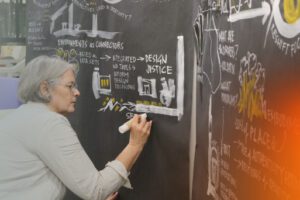
Encoding Experience: Conversations on Design, Emotion, and AI – Our team hosted a series of dinners exploring the intersection of design, human sciences, and technology with the overarching goal of elevating focus on people’s experience of the built environment. This multi-part blog series shares learnings and what’s next.
From CAD to Robotic Assembly: Over the past few years, the Autodesk Robotics Lab have been collaborating with the Computational Design and Fabrication Group at MIT in pursuit of a consistent goal: autonomous assembly directly from CAD. Fabrica is a complete dual‑arm system that starts from CAD and finishes with an assembled object on the table—no expert demonstrations, no task‑specific heuristics.
Our Research Connections series highlights design and make work in the industries Autodesk serves. Check out some of the presentations this year spanning a range of design and make topics.
From Design and Break to Design and Make: This two-part blog series explores how our teams create physical prototypes to test how AI can support design and expose tools to real-world friction.
Safer by Design: Benchmarks for Generative AI: AI is changing how designers work, from conceptual ideation to engineering validation. This blog post explores how designers can tell if an AI assistant is actually useful, or even safe, in real-world design contexts.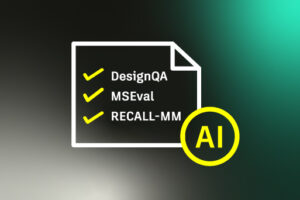
From Walls to Resources: Early Results in AI-Powered Building Deconstruction: The construction industry generates over 3 billion tons of construction and demolition waste (CDW) worldwide annually, accounting for approximately 36% of total global waste production. This article details how Autodesk Research is developing and testing a system that combines limited multimodal data like thermal imaging, radiofrequency, and GIS data with machine learning techniques to evaluate building materials non-destructively.
We look forward to sharing more stories next year; in the meantime, have a happy holiday season!
Get in touch
Have we piqued your interest? Get in touch if you’d like to learn more about Autodesk Research, our projects, people, and potential collaboration opportunities
Contact us