Advancing Physics-Informed AI at Autodesk: A Conversation with Nathan Kutz
Autodesk Research continues to expand its work in physics-informed AI, bringing together advanced computation, engineering expertise, and design innovation. We spoke with Nathan Kutz, Director of Physics-Informed AI at Autodesk Research, about what drew him to this role, where AI in science and engineering is headed, and what success looks like in this next chapter.
What drew you to Autodesk Research?
Two years ago, while on sabbatical in London, I spent time working with the McLaren Formula 1 team. During that experience, I kept coming back to a challenge that the broader research community hasn’t fully solved: how to optimize geometry itself and how to redesign shape in a truly physics-informed way using AI.
In many workflows, geometry is fixed and optimization happens around it. But what if we could rethink the shape entirely? What if AI and physics could work together to generate fundamentally new designs?
That question stayed with me.
What makes Autodesk uniquely compelling is the infrastructure already in place. The company has deep capabilities in generative design, simulation, and physics-based modeling. In academia, building that level of integrated tooling would take years and enormous resources. At Autodesk, that foundation already exists.
The opportunity here is to combine physics-informed AI with that design ecosystem to meaningfully compress design cycles and expand what’s possible. In an ideal future, you could feed in constraints and requirements, such as a technical rulebook, and generate an optimized design in a fraction of the time it takes today.
That potential, to close the loop between physics, AI, and geometry at scale, is what drew me to Autodesk Research.
Why is thought leadership important in this space?
AI is moving quickly, and leadership in this space requires both innovation and visibility.
For Autodesk Research, thought leadership means contributing meaningfully to the global research community while also advancing real-world engineering outcomes. It’s about publishing, speaking, engaging with peers, and sharing insights that move the field forward.
There’s also a practical dimension. Visibility helps attract top research talent and strengthens collaboration opportunities. The most curious and ambitious researchers want to be part of teams that are pushing boundaries and engaging with the broader scientific ecosystem.
At the same time, thought leadership requires balance. We want to demonstrate progress and impact while being thoughtful about what we share. Strategic communication matters.
The goal is to establish a clear signal: when Autodesk Research is part of the conversation around physics-informed AI, it represents rigor, innovation, and real engineering impact.
What trends do you see shaping AI in science and engineering over the next few years?
We’re entering a period where AI is moving beyond language and vision applications and into deeper scientific and engineering domains.
There is growing momentum around applying AI to physics-based systems – things like weather modeling, materials science, advanced manufacturing, infrastructure design, and more. These domains are complex, highly constrained, and rooted in physical laws. That makes them both challenging and incredibly high impact.
We’re already seeing accelerated efforts across the industry to build more capable scientific models. The next wave of AI innovation will focus on integrating data-driven methods with domain-specific physics knowledge.
This is exactly where Autodesk is positioned to lead. The company’s software already operates at the intersection of design and physics. By embedding physics-informed AI into those workflows, we can unlock new efficiencies and capabilities. Not just incremental improvements, but structural changes in how engineering problems are approached.
The opportunity ahead isn’t just about automation. It’s about augmenting human creativity and enabling engineers and designers to explore solution spaces that were previously too computationally expensive or time-consuming to consider.
From my perspective, we are in the right place at the right time.
What does success look like for you in this role?
Success is integration, scale, and measurable impact.
Autodesk’s products operate in complex physical environments – from buildings and infrastructure to advanced manufacturing systems. Physics underpins all of it.
For physics-informed AI to truly succeed here, it can’t exist as a siloed research effort. It needs to be embedded across the organization. That means partnering with product teams, contributing to core workflows, and enhancing outcomes across domains. The goal is to accelerate simulation cycles, improve design performance, reduce material usage, or enable new generative capabilities. The specific impact will vary by application, but the broader objective is consistent: make engineering faster, smarter, and more effective.
In my early conversations across teams, what stands out is the shared commitment to collaboration. There’s a strong sense that we are building something together.
If physics-informed AI becomes a foundational capability woven throughout Autodesk’s products and platforms by helping teams solve complex challenges at scale, that’s success.
Outside of research, what inspires you?
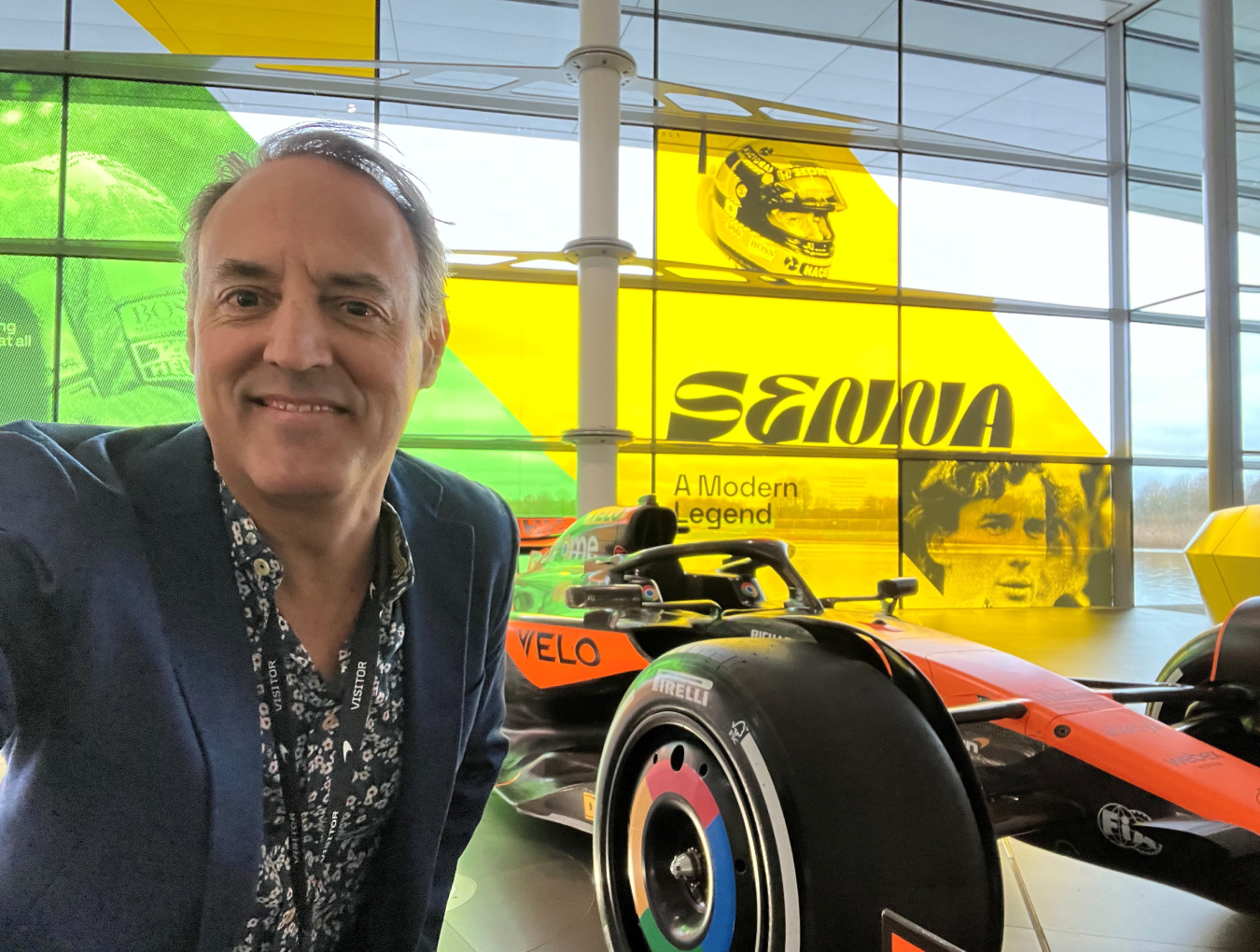
I’m a longtime Formula 1 fan and enjoy following the strategic and technical dimensions of the sport. It’s a fascinating example of engineering excellence operating at the limits.
Since moving to London, I’ve also become an Arsenal supporter. There’s something energizing about being part of a passionate community.
More broadly, I value the social and cultural experiences that come with being in a city like London. The National Gallery is a short walk from the office – you can step out, see a few masterworks, and return to your desk with a completely refreshed perspective.
For me, whether it’s sport, art, or research, it all comes back to community and shared curiosity. I’m excited to build that same spirit within Autodesk Research by creating an environment where collaboration is open, ideas move freely, and people feel recognized for the work they do.
That’s how momentum builds. And that’s how innovation happens.
Get in touch
Have we piqued your interest? Get in touch if you’d like to learn more about Autodesk Research, our projects, people, and potential collaboration opportunities
Contact us