Designing for the Human Experience
Encoding Experience at LFA 2026
Buildings today usually start as ghosts – sketched, modeled, tested, and revised in digital form long before they’re steel and concrete. Thus, design software now sits at the center of nearly every decision that shapes our built environment, letting architects, engineers, and owners visualize, simulate, and coordinate at astonishing complexity.
It’s gotten remarkably good at understanding buildings – but what if it understood the people using them just as well? If you’re an avid reader of this blog, you’ll already know this question sits at the heart of Encoding Experience, an initiative from Autodesk Research’s Enlivened Design team exploring how future design technologies might better account for human experience. It began in 2025 with a conversation over dinner (or three dinners in Boston, San Francisco and London, to be precise). If the past decade of the built environment has been defined by measuring carbon, could the next be defined by measuring something equally universal about how design shapes human wellbeing? A kind of joyprint?
That conversation has since grown into an expanding multidisciplinary community, bringing together voices from architecture, neuroscience, psychology, sociology, urban planning, human-computer interaction, AI… To get a flavor of the topics researched by its members, check out this talk series we’ve been running.
Bringing the conversation to the London Festival of Architecture
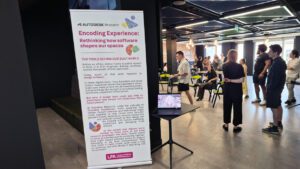 This year, the team wanted to augment the conversation with a sense of “practical” – doubling down on what design tools that consider experience might actually look like. A first-ever Autodesk event at the London Festival of Architecture – one of the world’s largest public celebrations of architecture and city-making – felt like the perfect start. LFA is a month-long, volunteer-led program, hosted across multiple London venues each June. It features hundreds of talks, tours, open studios and installations that bring architecture out of professional circles and into everyday public life.
In the spirit of the festival and its 2026 theme of “Belonging” the Enlivened Design team opened the doors to Autodesk’s London office, transforming its communal dining area into an interactive research space where visitors could explore emerging ideas, respond to provocative questions, and help shape future directions for design technology.
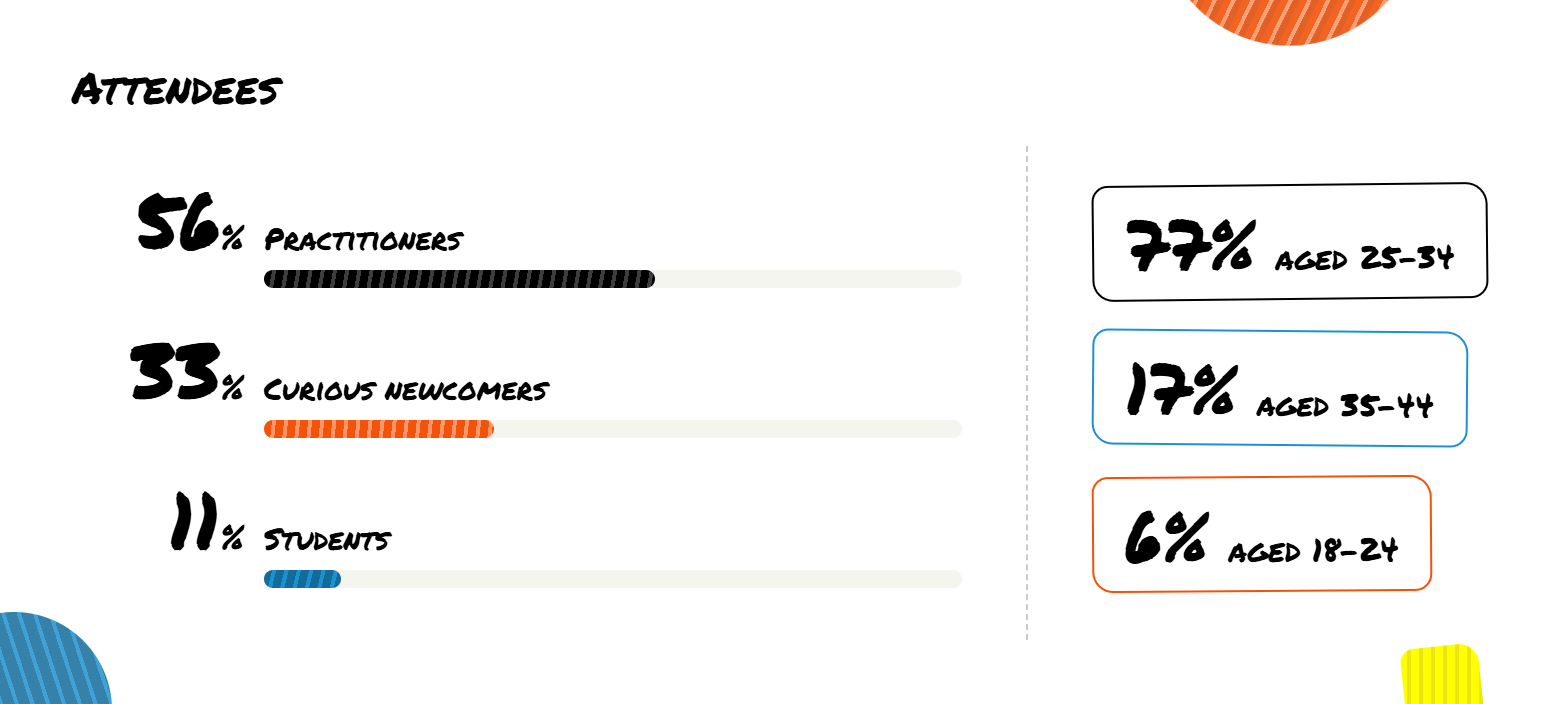
Despite unusually high temperatures across London, architects, designers, students, researchers, and curious members of the public gathered in Covent Garden to take part. Attendees ranged from large international firms including Foster + Partners to smaller practices, universities, and visitors with little prior knowledge of architectural software but a shared curiosity about how places influence human experience. We were very excited to see what they made of research we’ve done to date and what implications they thought the selection of scientific explorations and new technologies had for future design software.
Understanding experience through neuroscience
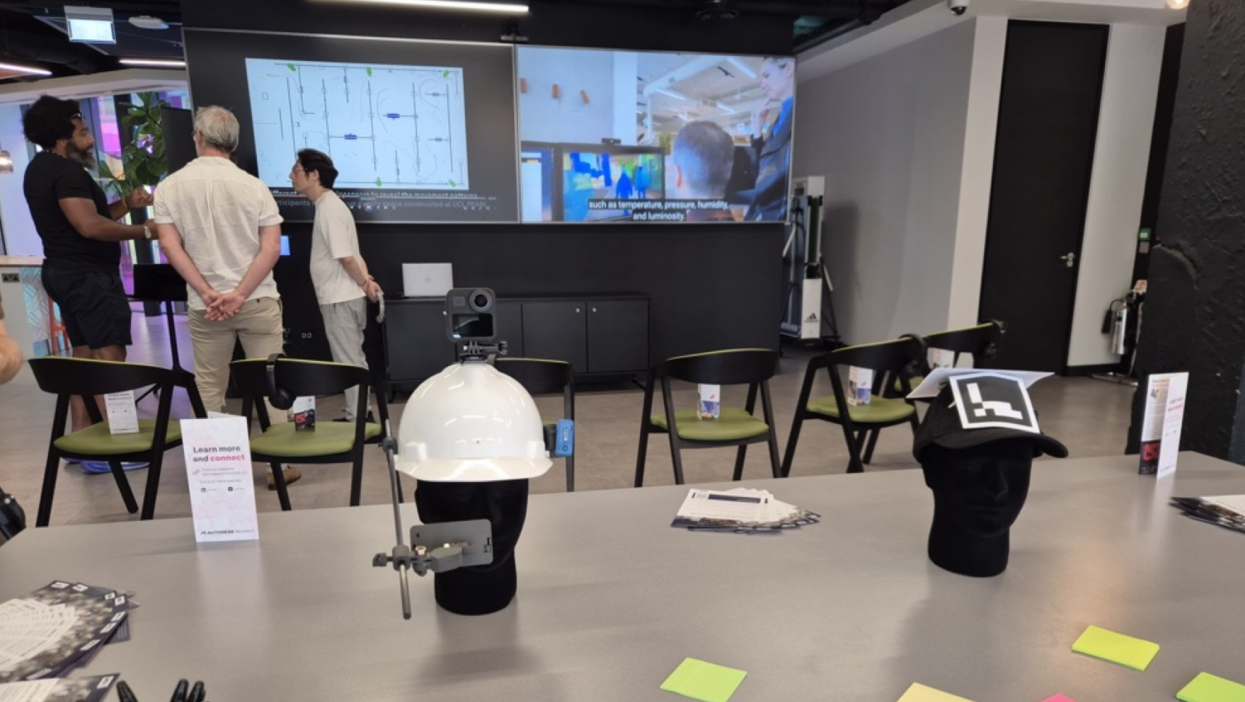
The first area of the exhibition explored 100 Minds in Motion, a project of unprecedented scale by researchers from University College London’s Centre for Neuroscience and Neurodesign including Autodesk Research Visiting Scholar, Dr. Fiona Zisch, and her co-director, Prof. Hugo Spiers, our long-time collaborators.
Through videos, wearable sensing equipment, and conversations with the research team, visitors were introduced to neuroarchitecture, an emerging interdisciplinary field studying how environments influence the human mind and body. Seeing the sensing headsets used during research, and speaking directly with academics involved in the project, helped bridge the gap between scientific inquiry and practical design. It invited participants to ponder how scientific evidence about human experience of spaces might eventually inform design decisions from the earliest stages of a project.
Listening to lived experience
The next spot showcased research developed with The Bentway, exploring how participatory design could remain present throughout the design process.
Though communities are increasingly invited into conversations about future places, as ideas become drawings, models, simulations, budgets, and approvals, lived experience often fades in comparison with measurable project requirements.
With the Bentway installation, attendees were asked to consider how future design software could help preserve those human perspectives. Could qualitative feedback, community stories, and lived experience stand alongside traditional metrics such as cost, energy performance, or carbon emissions? Rather than becoming background context, could they actively shape design decisions?
Imagining the next generation of design tools
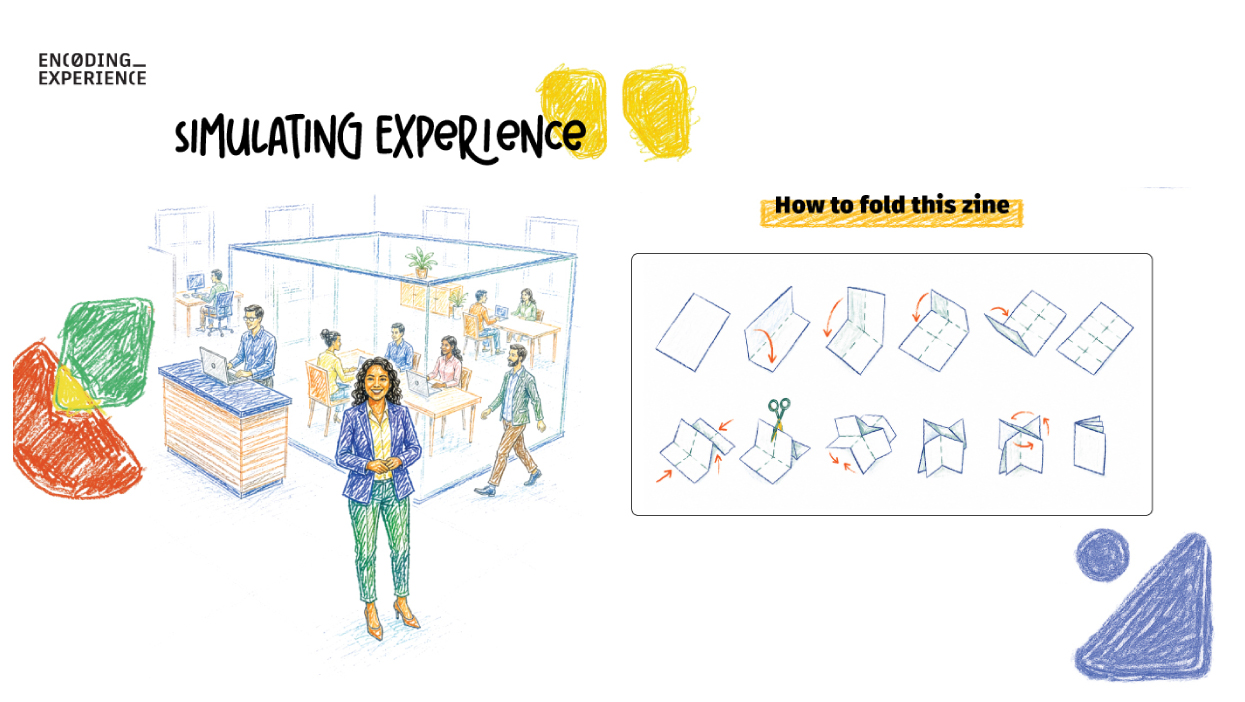 After some absorbing and pondering, the event switched gears with a “making station”. Participants folded and assembled a small zine describing a fictional design platform populated by AI-generated “design council” members. Drawing on demographic research, ethnographic studies, stakeholder interviews, surveys, and consultation feedback, the system imagined automatically generating diverse personas capable of evaluating a proposed design from multiple perspectives.
How might an older resident experience this space? A teenager? Someone with sensory sensitivities? A first-time visitor? A parent with young children?
Instead of evaluating only circulation, daylight, or structural performance, the zine proposed a software capable of assessing accessibility, thermal comfort, social interaction, feelings of calm, or belonging, qualities that are deeply human yet difficult to quantify.
The exercise was intentionally speculative, inspired by emerging research showing that large language models can exhibit surprisingly human-like reasoning in certain contexts. More importantly, it encouraged participants to imagine a future where qualitative insight becomes as actionable as quantitative analysis.
Throughout the workshop, visitors contributed their own perspectives through interactive prompts and a collaborative wall of responses, reflecting on questions such as:
- How can lived experience better shape the spaces we design?
- What would make AI-generated feedback trustworthy?
- How might neuroarchitecture help create greater belonging?
- How should design software evolve to bring more voices into decision making?
Each participant received a unique set of printed stickers, creating a playful way to contribute across multiple activities while leaving behind a collective record of ideas generated during the day.
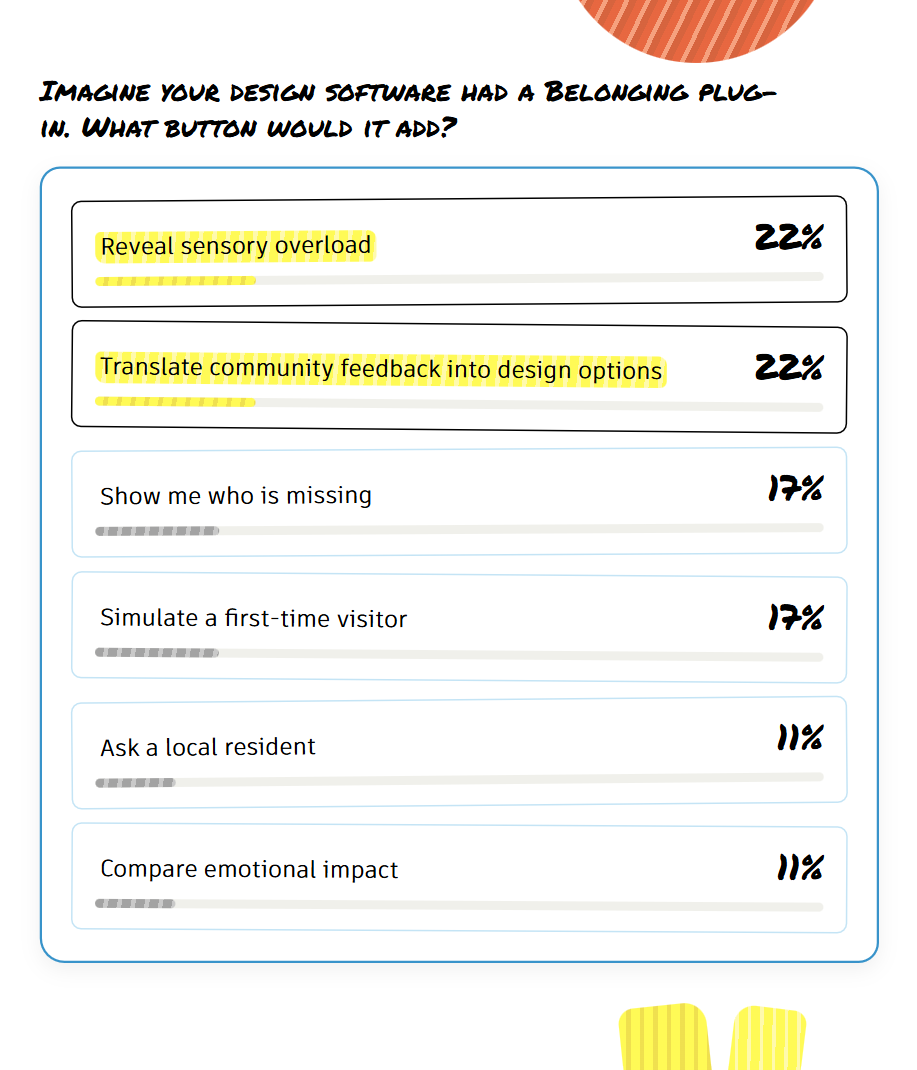
A growing conversation
Perhaps the greatest success of the workshop was not feedback to any individual prototype, but the overarching conversations sparked. It was amazing to see how many attendees hung around way past their “designated” one-hour timeslots, deep in discussion with Autodesk Research team, our colleagues from UCL, and each other. Inspired, we are already planning next events, furthering both conversations around future design software focused on the people in our built environments and the research needed to create it.
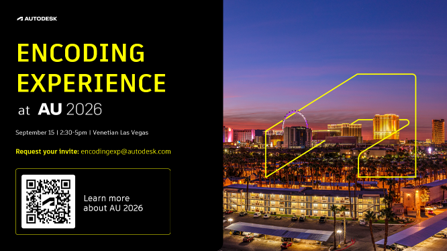
If you’re attending Autodesk University in Las Vegas next month and would like to join us for a deep dive on our latest, not yet publicly shared prototypes, plus a workshop imagining their practical uses, please reach out: encodingexp@autodesk.com.
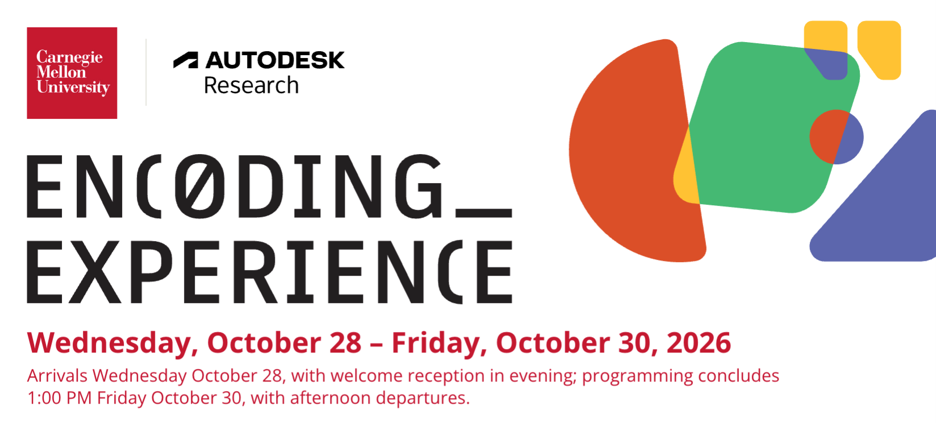
We’re also partnering with Carnegie Mellon University’s Sustainable & Livable Urban Systems (SALUS) Lab this fall to convene a wide variety of researchers and practitioners for the Encoding Experience Summit. Building on the momentum of the conversation series and the forthcoming Ten Questions paper, the symposium is designed as a working think tank. Participants will collaborate across disciplines to identify shared research priorities, launch a human-centered built environment data challenge, and seed new Autodesk residency projects that move these ideas from exploration toward implementation.
If the London Festival of Architecture demonstrated what becomes possible when diverse voices imagine the future of design tools together, the summit will focus on turning that imagination into action.
The future of design software may not simply be about helping us build better buildings. It may be about helping us build places where more people can truly belong.
Get in touch
Have we piqued your interest? Get in touch if you’d like to learn more about Autodesk Research, our projects, people, and potential collaboration opportunities
Contact us